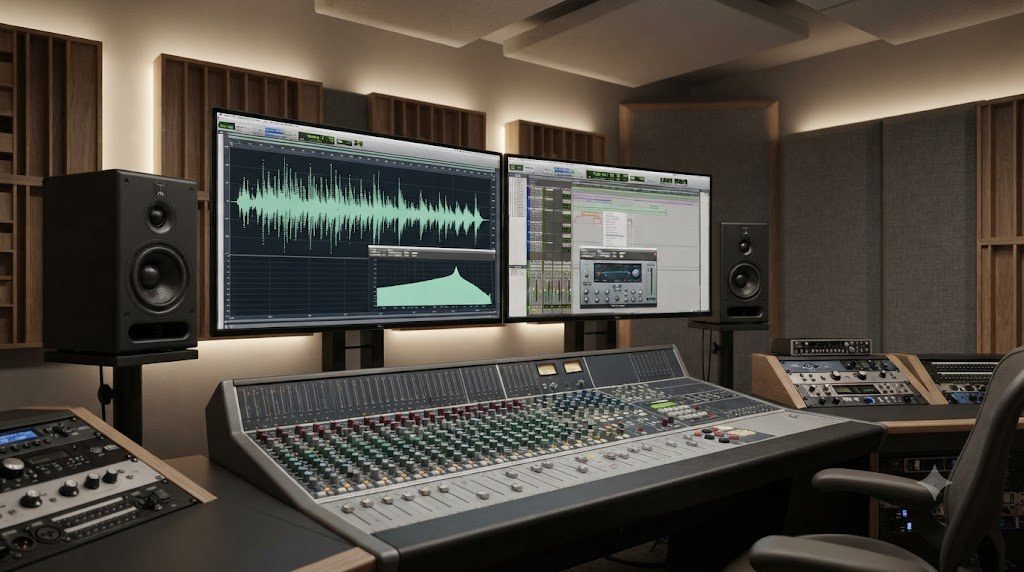
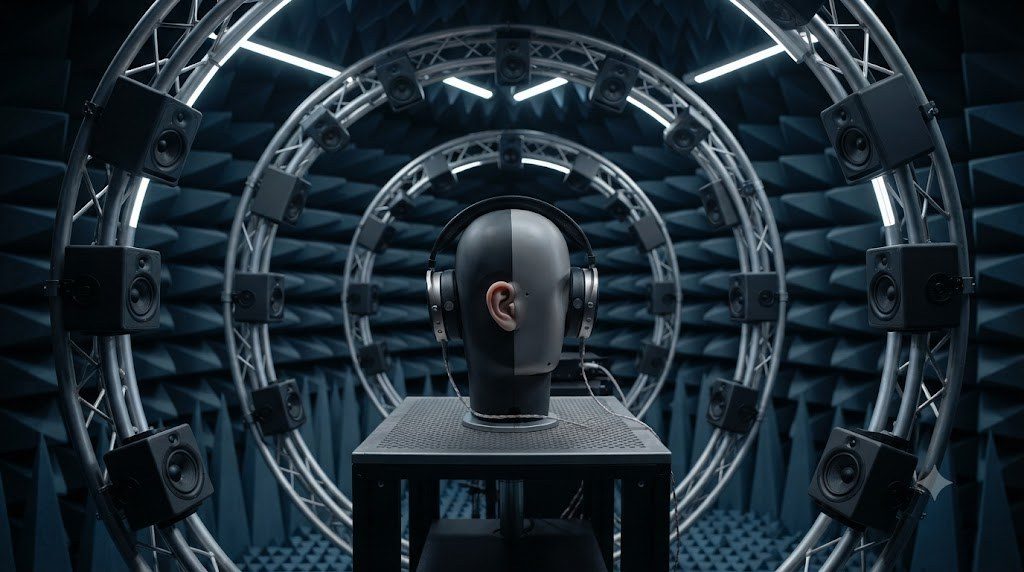
Networked Studio Infrastructure: Audio-over-IP (AoIP), Audinate Dante, AES67, MADI, and IEEE 1588 PTPv2 Clock Synchronization
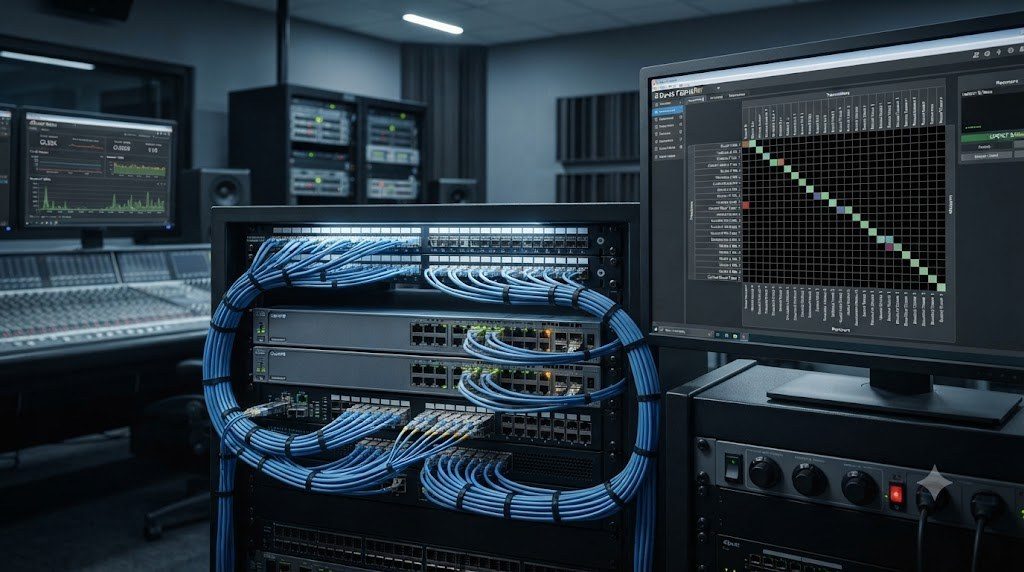
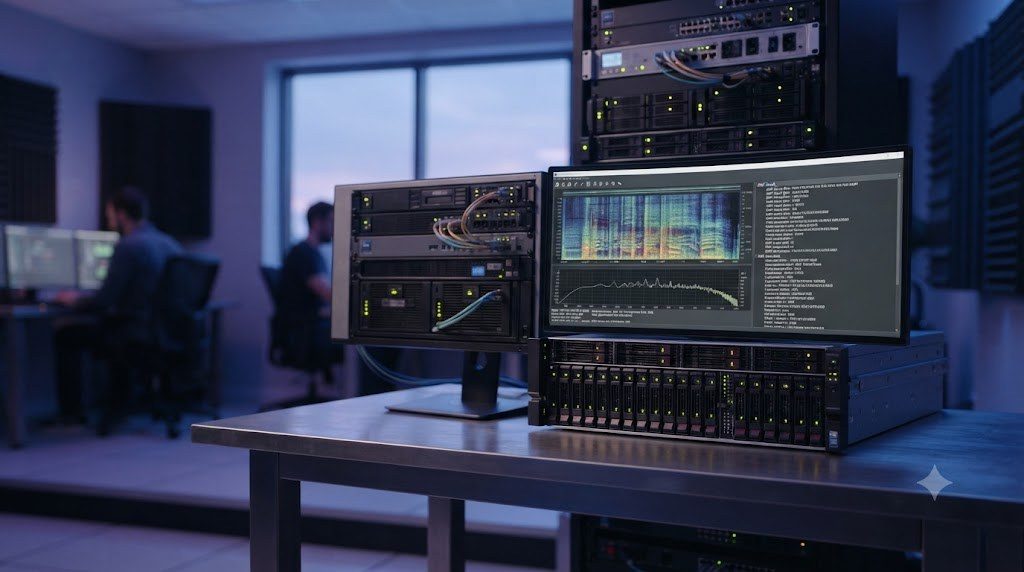
In legacy recording studios, concert arenas, and broadcast centers, routing 64 or 128 channels of balanced analog audio between live stage boxes, mixing consoles, outboard racks, and DAW recorders required massive, multi-ton copper multicore “snakes” terminated with hundreds of solder joints and patchbay normals—each vulnerable to ground loops, capacitive high-frequency roll-off, and crosstalk. Today, modern … Read more
Analog Magnetic Tape & Vinyl Mastering Physics: Ultrasonic AC Bias, Fluxivity Calibration, and RIAA Equalization

Long before discrete PCM sampling and multi-bit Delta-Sigma converters entered the recording studio, generations of iconic musical recordings were captured and distributed via two purely physical, electromechanical-magnetic storage mediums: Open-Reel Analog Magnetic Tape (such as the Studer A800, Ampex ATR-102, and Telefunken M15) and Microgroove Vinyl Phonograph Records cut on feedback-controlled Neumann VMS-70/VMS-80 and Scully … Read more

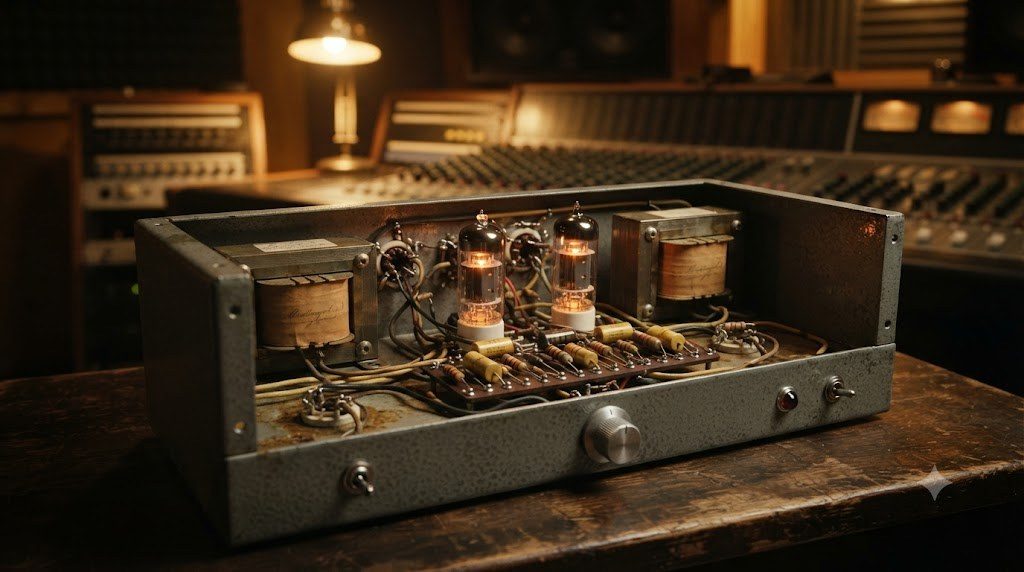
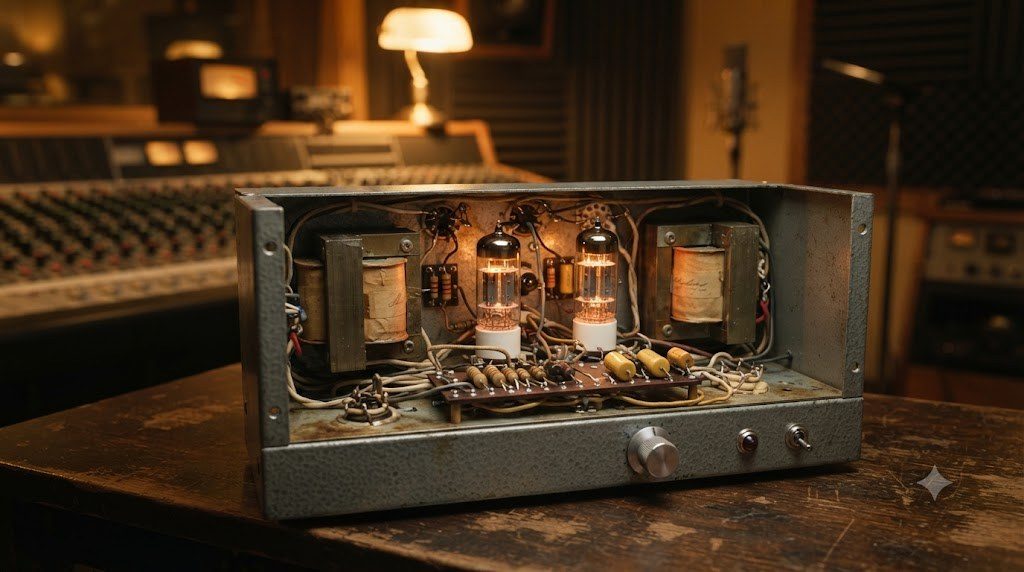
Microphone Preamplifier Topologies: Johnson-Nyquist EIN, Class-A Discrete Transistors, Vacuum Tube Triodes, and Audio Transformers

Of all the electronic stages in the recording signal chain, none faces a more demanding electrical challenge than the Microphone Preamplifier. A passive ribbon or dynamic microphone placed in front of an acoustic guitar generates an AC voltage as small as $100\text{ microvolts}$ ($-78\text{ dBu}$), whereas a large-diaphragm condenser microphone placed inside a kick drum … Read more

ADC & DAC Converter Architecture: Multi-Bit Delta-Sigma DEM, Reconstruction Filters, and Femtosecond Word Clock Jitter

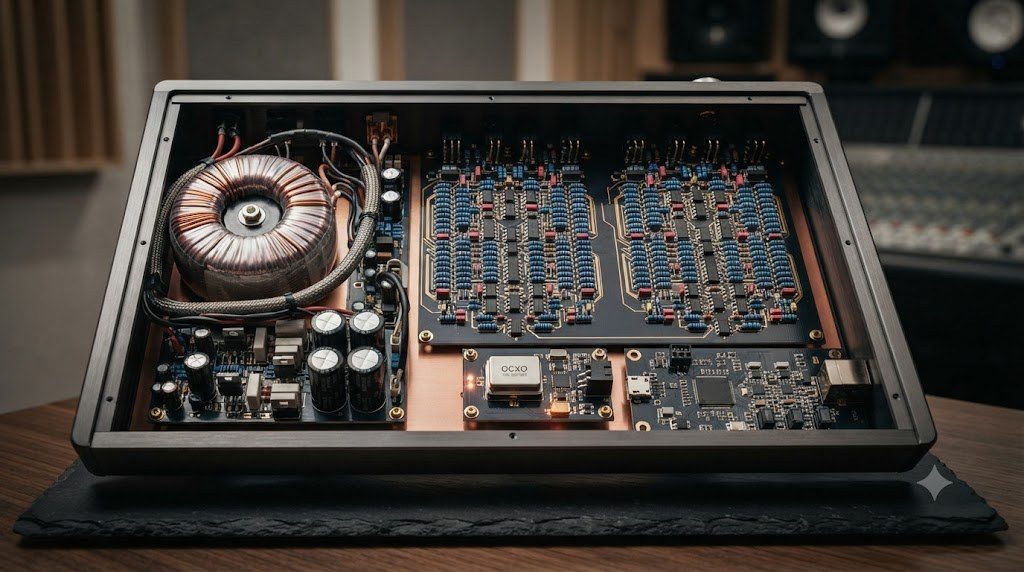
At the heart of every modern recording studio, mastering room, and audiophile playback chain sits the critical boundary between continuous physical acoustics and discrete binary mathematics: the Analog-to-Digital Converter (ADC) and the Digital-to-Analog Converter (DAC). To achieve a real-world unweighted dynamic range exceeding $126\text{ dB}$ and Total Harmonic Distortion plus Noise ($\text{THD+N}$) below $-120\text{ dB}$ … Read more

Psychoacoustic Lossy Codecs & Object Spatial Formats: MP3, AAC, Opus MDCT Masking, and Dolby Atmos ADM BWF

While lossless compression hits a mathematical floor determined by Shannon entropy and thermal noise at roughly $50\%$ of the original PCM bitrate ($\approx 700\text{ to }900\text{ kbps}$ for stereo CD audio), Perceptual Lossy Audio Codecs achieve radical compression ratios of $80\%$ to $92\%$ ($96\text{ kbps}$ to $320\text{ kbps}$) by exploiting the biological physiology and neuro-processing … Read more

Lossless Audio Compression Internals: FLAC Linear Predictive Coding, Golomb-Rice Entropy, ALAC, and Broadcast WAV

In digital audio engineering and archival distribution, Lossless Audio Compression achieves a mathematical feat that often surprises casual listeners: reducing the storage footprint and streaming bandwidth of uncompressed Linear PCM audio by $40\%$ to $60\%$ while guaranteeing that the decoded output waveform is $100\%$ bit-for-bit identical to the original studio master. Unlike psychoacoustic lossy codecs … Read more

Direct Stream Digital (DSD) & 1-Bit Delta-Sigma Modulation: Ultrasonic Noise Shaping, SACD, DoP, and DXD

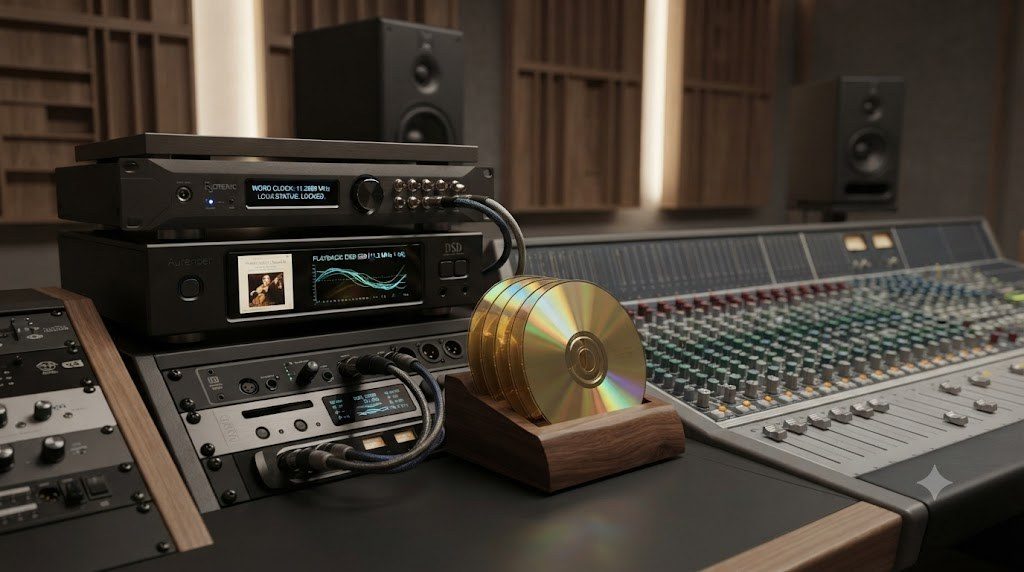
While multi-bit Linear Pulse Code Modulation (LPCM) represents audio by sampling at moderate rates ($44.1\text{ kHz}$ to $192\text{ kHz}$) using wide 16-bit or 24-bit binary words, Direct Stream Digital (DSD) inverts this paradigm completely. Co-developed by Sony and Philips in 1999 as the underlying storage architecture for the Super Audio CD (SACD) and long-term archival … Read more

Uncompressed Digital Audio: Nyquist-Shannon Sampling Theorem, Linear PCM, 32-Bit Float, and TPDF Dithering

Every digital audio workstation, streaming platform, mastering converter, and optical disc format relies upon the mathematical foundations established by Harry Nyquist, Claude Shannon, and Vladimir Kotelnikov in the early twentieth century. Linear Pulse Code Modulation (LPCM) transforms a continuous-time, infinitely variable analog acoustic voltage $v(t)$ into a discrete sequence of binary numerical words by performing … Read more

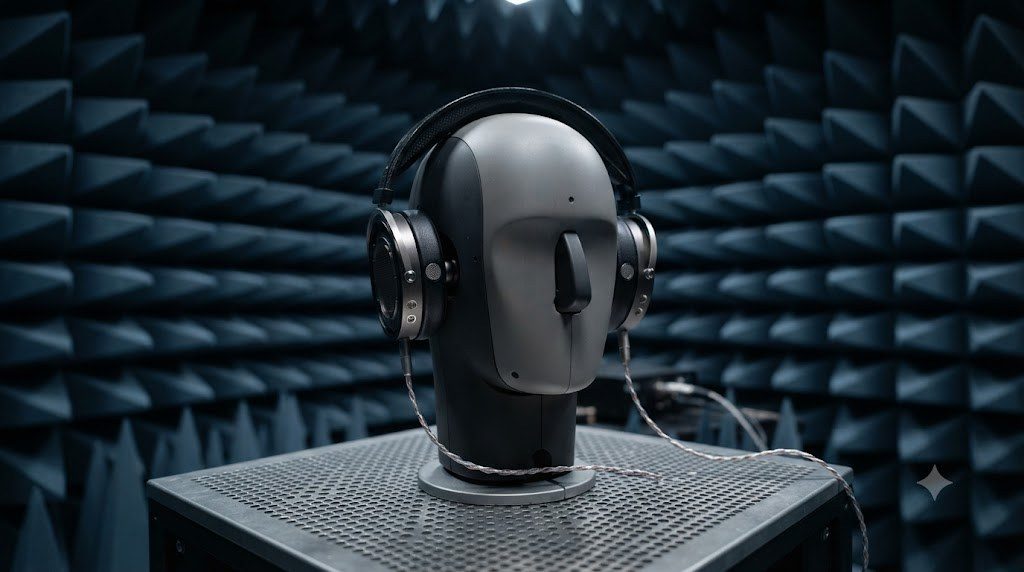
Head-Related Transfer Functions (HRTF), Harman Target Curves, Crossfeed Networks, and Binaural Spatial Audio

Why does a loudspeaker with a ruler-flat anechoic frequency response ($20\text{ Hz}$ to $20\text{ kHz} \pm 0.5\text{ dB}$) sound natural, balanced, and lifelike in a treated room, whereas a headphone engineered with an identical flat frequency response measured at the eardrum sounds intolerably dark, muffled, and devoid of upper-midrange clarity? Conversely, why do traditional stereo … Read more

Active Noise Cancellation (ANC) Engineering: Feedforward, Feedback, Hybrid FxLMS Adaptive DSP, and Acoustic Occlusion

Modern acoustic isolation in reference headphones and in-ear monitors relies on a sophisticated convergence of passive mechanical sealing and real-time digital signal processing (DSP). Active Noise Cancellation (ANC) operates on the fundamental physical principle of destructive wave interference: by sampling ambient environmental acoustic pressure via dedicated miniature electret or MEMS microphones, inverting the phase of … Read more